Project Preparation
Good project management is a delivery system. It turns a goal into a plan, a plan into working releases, and each release into lessons that improve the next one.
Discuss Your ProjectProject Preparation is the stage where we reduce uncertainty before development starts. We align outcomes, define scope boundaries, surface risks, and confirm constraints so the team can ship with fewer surprises.
The result is a clear baseline: what success means, what is included and excluded, how decisions get made, and what the first release should deliver. From there, planning and execution move faster and stay easier to control.
What “good” looks like in real projects
A healthy process is simple to follow, measurable, and repeatable across teams. You see it in three things: clear scope, consistent cadence, and decisions that are documented and revisited.
You do not need more meetings. You need the right checkpoints: alignment before work starts, control while work is in progress, and reflection after each iteration.
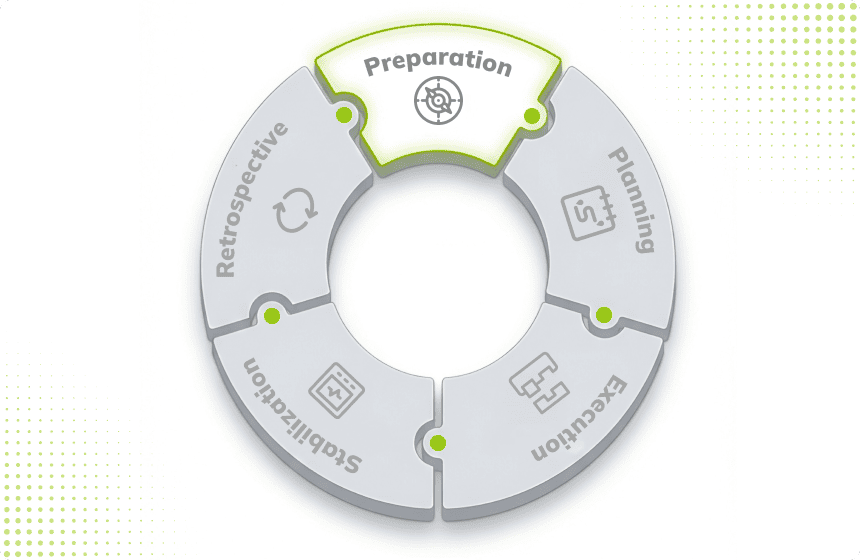
The full cycle in one view
This table shows the flow we build around most software projects.
| Phase | Goal | Typical outputs | What we do |
|---|---|---|---|
| Preparation | Align on outcomes and constraints | goals, scope boundaries, risk list, success metrics | workshops, stakeholder interviews, system audit, constraints mapping |
| Planning | Turn scope into an executable plan | roadmap, backlog, priorities, estimates, release plan | user stories, acceptance criteria, dependency mapping, milestone planning |
| Execution | Deliver in small, testable increments | working increments, demos, release notes | sprint or kanban flow, daily sync, review, controlled releases |
| Stabilization | Keep production stable while shipping | monitoring, incident playbooks, tech debt plan | observability, triage rules, fixes, performance checks |
| Retrospective | Improve the way the team works | action items, owners, due dates, follow-up checks | root-cause review, process tweaks, measurable experiments |
Project preparation
Preparation is where you remove ambiguity early, before it turns into rework later.
What we lock down first
- Business goal and success metrics
- Who the users are and what they must be able to do
- Scope boundaries, what is included and what is explicitly out
- Constraints: deadlines, compliance, integrations, legacy systems
- Decision makers and escalation path
A short, practical checklist
- Single source of truth for requirements and decisions
- Access to environments and analytics for existing products
- Known risks and unknowns listed openly
- Definition of “ready” for a task and “done” for a release
Planning that survives reality
Plans break when they ignore dependencies, unclear acceptance criteria, and hidden work.
How we plan without over-planning
- We write user stories with acceptance criteria that can be tested
- We surface dependencies early: payments, auth, data, third-party APIs
- We split work into deliverable slices, not technical chores
- We set a release cadence that matches the business risk level
Core planning artifacts
- Roadmap: outcomes and sequencing
- Backlog: prioritized, sized, with clear acceptance criteria
- Release plan: what goes out, when, and how we validate it
Execution and control
Execution is where visibility matters more than promises.
Cadence that keeps everyone aligned
- Short daily sync for blockers and ownership
- Review or demo to show what is actually working
- Regular planning to keep priorities aligned with reality
- Clear rules for urgent production work versus planned work
How we prevent busy work
Every task ties to a user-facing outcome, a risk reduction, or a measurable improvement. If it does not, it gets cut or reframed.
Quality built into the flow
Quality is not a final step. It is a set of gates that run continuously.
Typical quality controls
- Code review with clear standards
- Automated tests where they pay off most
- CI/CD checks before merging and releasing
- Staging environment parity for meaningful verification
- Monitoring and alerting for production feedback
Retrospectives that change results
A retrospective is a working session where the team reviews what happened, why it happened, and what to change next. The output is not a document. It is a small set of actions with owners and deadlines.
A simple retrospective structure
- What went well
- What slowed us down
- Where quality slipped or risks appeared
- What we will change in the next cycle
Rules that keep it useful
- No blame, only causes and fixes
- Action items must be small enough to complete in one cycle
- Each action has an owner and a follow-up date
- We verify impact using a metric, not vibes
Examples of metrics teams actually use
- Lead time from “in progress” to “done”
- Defect rate per release
- Reopened tasks
- Incident frequency and time to restore
- Release predictability versus plan
If you want a process that makes delivery predictable and keeps quality stable after launch, tell us what you’re building. We will review your goals, constraints, and current setup, then propose a plan with clear milestones and cadence.
Portfolio
Examples of our work
View all cases
Unified Logistics Platform for a National 3PL Operator
We built an Order Management System for UVK, a leading 3PL operator in Ukraine. We cut delivery planning time to 40 minutes, with 98% of deliveries arriving on time
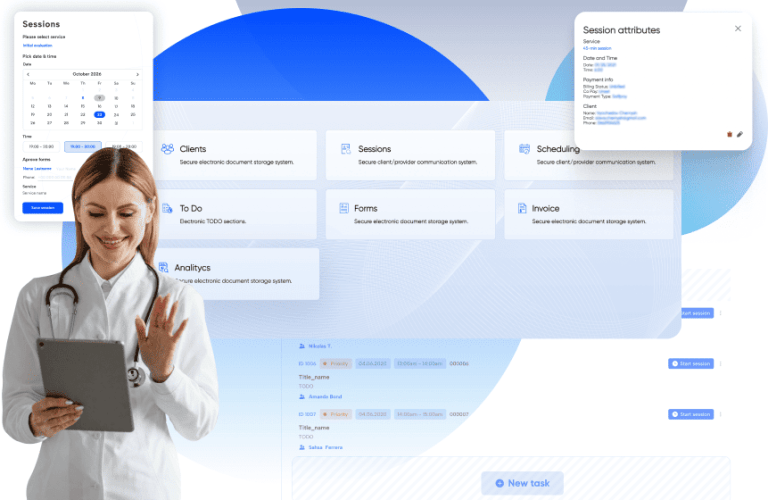
I-Practice Online Booking Web Platform
Healthcare booking platform that lets patients choose a doctor, pick a time slot, and confirm appointments with reviews, PDFs, and email notifications, while clinics manage schedules with less manual coordination.
FAQ
What methodology do you use: Scrum or Kanban?
We adapt to the product. Time-boxed iterations work well for feature delivery. Kanban fits support-heavy work. The key is a clear flow and consistent checkpoints.
How long does preparation take?
For most projects: a few sessions for alignment, then a short planning cycle. Existing systems may need extra time for access, audit, and risks.
Who owns priorities?
The business owner sets priorities. The delivery team translates them into an executable plan and flags trade-offs.
How do you handle scope changes mid-project?
We document the change, estimate impact, and adjust priorities. If something new enters, something else moves out or the timeline changes.
Do you run retrospectives with clients involved?
We can. Often we do an internal team retro plus a shorter client check-in focused on delivery outcomes and process adjustments.
What do clients get at the end of each cycle?
A demo of working functionality, release notes or summary, and a clear view of what is next.


Have a project in mind?
Let's chat
Your request has been accepted!
In the near future, our manager will contact you.
Have a project to discuss?

Have a partnership in mind?