Support & Maintenance
Ongoing support and maintenance for web and mobile products, with monitoring, fixes, updates, and predictable delivery.
Discuss Your ProjectWe support digital products after launch with structured maintenance, incident response, and ongoing improvements. The goal is stable performance, fewer production surprises, and a clear plan for updates as your product, traffic, and integrations evolve.
What Support and Maintenance Covers
Monitoring and observability
We set up and maintain monitoring, alerts, logs, and performance signals so issues are detected early and resolved faster.
Bug fixes and incident response
We investigate production issues, reproduce failures, deliver fixes safely, and document root causes to prevent repeats.
Security updates and dependency maintenance
We keep libraries, frameworks, and infrastructure components updated, reduce exposure to known vulnerabilities, and support secure release practices.
Performance and reliability improvements
We optimize slow endpoints, database queries, background jobs, and caching where it impacts user experience and operating cost.
Infrastructure and deployment support
We maintain CI/CD pipelines, environments, configuration, backups, and release routines to keep deployments predictable.
Feature improvements and small iterations
We deliver small product improvements in controlled cycles without disrupting core functionality.
How We Work
Assessment and onboarding
We review architecture, environments, access, release history, and current risks, then define the support scope and workflow.
Support model and priorities
We agree on severity levels, response rules, communication channels, and what is included in the maintenance plan.
Delivery cadence
We run predictable cycles for fixes and improvements, with clear reporting and visibility into progress.
Release and validation
Every change goes through review, testing, and safe release practices to avoid introducing new incidents.
Service Levels and Communication
We define severity levels, response targets, and update frequency. You get a clear escalation path and regular status updates during incidents and releases.
What You Get
- Stable product operations with monitoring and clear ownership
- Faster incident resolution with a repeatable triage process
- Safer updates through controlled releases and validation
- Ongoing improvements aligned with business priorities
- Transparent reporting on work completed and next steps
Portfolio
Examples of our work
View all cases
Unified Logistics Platform for a National 3PL Operator
We built an Order Management System for UVK, a leading 3PL operator in Ukraine. We cut delivery planning time to 40 minutes, with 98% of deliveries arriving on time
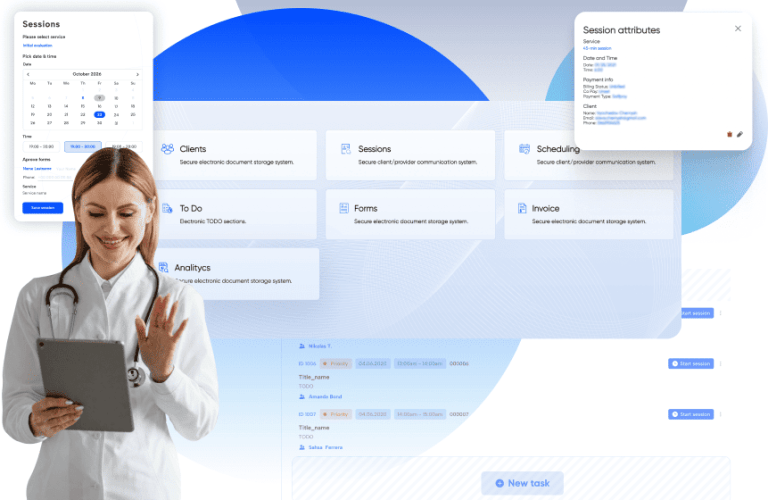
I-Practice Online Booking Web Platform
Healthcare booking platform that lets patients choose a doctor, pick a time slot, and confirm appointments with reviews, PDFs, and email notifications, while clinics manage schedules with less manual coordination.
FAQ
What types of products do you support?
We support web and mobile products at different stages: MVPs that need post-launch stabilization, mature systems with regular releases, and platforms with integrations, payments, user accounts, and operational workflows.
Do you support products built by another team?
Yes. We can take over maintenance after a short onboarding: access setup, architecture review, environment check, and an initial backlog with prioritized risks and quick wins.
What is included in monthly support?
Typically: monitoring and alerts, incident triage, bug fixes, dependency updates, CI/CD and environment support, plus a planned set of improvements delivered in a predictable cadence.
How do you handle urgent production issues?
We use severity levels (P1-P4), a clear escalation path, and fast triage. For critical incidents, we focus first on restoring service safely, then on root cause analysis and prevention.
Can you provide 24/7 coverage?
If required, we can set up an on-call model with agreed coverage hours, escalation rules, and response targets based on business criticality.
How do you prevent “fixing one bug and creating another”?
We use controlled releases, code review, regression checks, and safe rollout practices. Changes are validated before deployment and monitored after release.
Do you work with our in-house developers?
Yes. We can operate as an extension of your team with a shared backlog, shared release process, clear responsibilities, and regular check-ins.
How do you prioritize tasks?
We align priorities with business impact: revenue flows, key user journeys, stability risks, and upcoming releases. You get a visible backlog and clear weekly or sprint-based planning.
What access do you need to start?
Repository access, production and staging visibility, monitoring and logs where available, and deployment pipeline context. If something is missing, we can help set it up.
What happens after the first month?
After stabilization, support typically shifts toward fewer incidents and more planned improvements: performance, reliability, UX fixes, and ongoing updates without disrupting core functionality.


Have a project in mind?
Let's chat
Your request has been accepted!
In the near future, our manager will contact you.
Have a project to discuss?

Have a partnership in mind?