Hybrid (Cross-Platform) App Development
We build hybrid (cross-platform) mobile apps for iOS and Android with a shared codebase, consistent UX, and release-ready quality. From MVP to full production, we handle discovery, UI/UX design, development, QA, and store launch so you can ship faster and scale without maintaining two separate native apps.
Discuss Your ProjectCross-platform mobile apps are a practical choice when you need one product for iOS and Android, faster releases, and a consistent user experience without maintaining two separate codebases.
Today, mobile usage dominates many customer journeys. That’s why businesses that once relied only on a website now build mobile apps to keep retention high, improve conversion, and stay present where users spend most of their time.
What cross-platform means
A cross-platform app is a mobile application delivered for both iOS and Android while sharing a large part of the codebase.
Depending on the product and requirements, cross-platform can mean:
- shared UI and business logic (one unified app experience)
- shared business logic with native UI per platform (when platform-specific UX is critical)
- a web-first UI wrapped in a native container (for products that start from a web stack)
Native vs cross-platform
Native apps are built separately for each platform. They can be the right fit for performance-heavy products, complex graphics, deep platform-specific features, or when you need platform-first UI behavior.
Cross-platform is often the best fit for business applications where speed to market, predictable maintenance, and unified UX matter more than edge-case platform optimizations.
When cross-platform is the right choice
Cross-platform development works best when you need:
- one product across iOS and Android with the same features
- an MVP that can evolve into a production system
- faster iteration cycles for features and UX changes
- consistent UI across platforms
- lower total maintenance cost compared to two separate native apps
- easier scaling with a single core team
What you get with OneLogicSoft
If you contact us for cross-platform app development, you get a team that covers the full delivery cycle and stays accountable after launch.
Key advantages of working with us:
01 Extensive engineering experience across business applications
02 Realistic delivery timelines and clear milestones
03 Balanced cost without sacrificing quality
04 Custom solutions aligned with your product goals
05 Ongoing support after release
Benefits of cross-platform apps
Unified codebase and reusable components
One core codebase reduces duplication and makes it easier to keep features aligned across platforms. It also simplifies updates and long-term product growth.
Faster development and simpler maintenance
Instead of building and supporting two separate apps, you invest in one product with one release cycle. This reduces overhead and makes improvements easier to plan and deliver.
Consistent functionality and a familiar interface
Users often switch between devices. A cross-platform app keeps the experience consistent, so the product feels the same regardless of the platform.
Wider reach and simpler marketing
You launch on both platforms at once, covering a larger audience from day one. Marketing campaigns and product updates are easier to manage when the experience is consistent across devices.
A practical path for startups and MVPs
Cross-platform is a strong option for startups and new products with limited budgets. It allows you to validate an idea on multiple platforms and iterate without rebuilding everything from scratch.
Features
Cross-platform app design
Design is not decoration. It defines how fast users reach the goal, how clear the interface feels, and how the product is remembered.
We design cross-platform apps with:
- user flows and wireframes
- clickable prototypes
- a consistent UI kit for all screens
- a design approach that fits your brand, not generic templates
Cross-platform application development
Cross-platform development usually takes less time than building separate native versions. To keep delivery efficient and stable, we use proven architectural patterns and technologies that match the product’s requirements.
We typically build hybrid apps with modern stacks such as:
- React Native
- Flutter
- native-first approaches with shared business logic where it makes sense
- web-first hybrid solutions when the product starts from a web stack
The final choice depends on performance expectations, UI complexity, integrations, and your roadmap.
Cost of developing a cross-platform application
The cost depends on scope, not on the label “hybrid”.
Pricing is driven by:
- number of screens and user roles
- integrations (payments, CRM/ERP, analytics, maps)
- offline mode and synchronization complexity
- custom UI and animation density
- security requirements and environments (staging/production)
If you share your requirements, we can estimate the scope and propose options: from a lean MVP to a full production system with scaling in mind.
Our hybrid apps: Stackflow
To show the quality of our work, we can share examples from our hybrid app portfolio. Stackflow is one of them. It includes production-ready functionality and covers the client’s requirements end-to-end.
Discuss your project
If you want to build a cross-platform app for your business, tell us what you’re planning, what platforms you need, and what the first release must include. We’ll propose the right approach, define a realistic roadmap, and help you ship a stable product that can grow.
Portfolio
Examples of our work
View all cases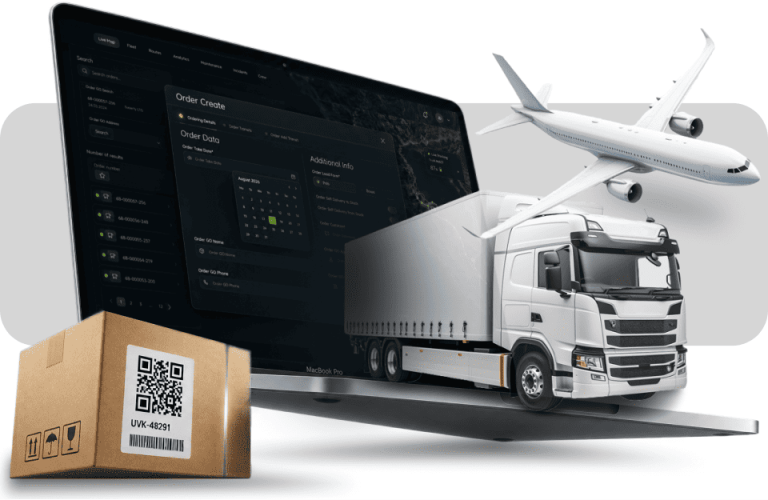
Unified Logistics Platform for a National 3PL Operator
We built an Order Management System for UVK, a leading 3PL operator in Ukraine. We cut delivery planning time to 40 minutes, with 98% of deliveries arriving on time
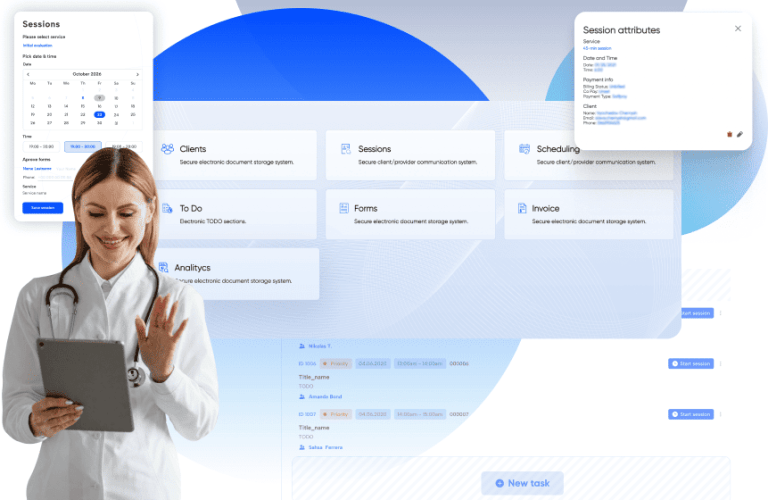
I-Practice Online Booking Web Platform
Healthcare booking platform that lets patients choose a doctor, pick a time slot, and confirm appointments with reviews, PDFs, and email notifications, while clinics manage schedules with less manual coordination.
FAQ
What is a hybrid (cross-platform) app?
A cross-platform app is a mobile application released for both iOS and Android where most of the codebase is shared. The goal is to deliver the same core features and a consistent user experience across platforms with a single development stream.
Is cross-platform the same as “web app in a wrapper”?
Not always. Some hybrid apps are web-first and run inside a native container, but many cross-platform apps use native UI rendering or compiled UI frameworks. The right approach depends on performance needs, UI complexity, and device feature usage.
Will a cross-platform app look “non-native”?
It can, if the design system and UI behavior are handled poorly. With a proper UI kit, platform-specific UI rules where needed, and real device testing, cross-platform apps can look and feel clean on both iOS and Android.
When should we choose native instead?
Native is usually better for graphics-heavy apps, advanced AR/3D, complex camera pipelines, very performance-sensitive interactions, or when platform-specific features must be adopted immediately with no dependency on cross-platform modules.
Can you build an MVP first and then scale it?
Yes. We can ship an MVP with the minimum required features, then expand it into a production-grade system: better architecture, deeper analytics, optimized performance, and additional modules without rebuilding the product from scratch.
Do you need access to our users’ accounts or internal systems?
Only if your product requires integrations and you choose to connect internal services. For most projects, we work through sandbox environments, test credentials, or API keys created for development and staging.
Can you integrate payments, maps, and analytics?
Yes. Typical integrations include payment providers, mapping and routing, push notifications, analytics, CRM/ERP connections, and customer support tools. The final list depends on your product scope.
Do you help with App Store and Google Play release?
Yes. We support store preparation, release flows, versioning, and post-release monitoring (crashes, stability, performance). We also help set up staging/production environments so releases stay predictable.
How long does cross-platform development take?
It depends on scope: number of screens, roles, integrations, offline mode, and UI complexity. After you share requirements, we define milestones and a realistic timeline for MVP and subsequent releases.
How is pricing calculated?
Pricing is driven by the feature scope and technical complexity: user roles, integrations, offline and sync, custom UI, security requirements, and the number of environments. We can propose options at different budget levels without cutting core quality.
Do you provide ongoing support after launch?
Yes. We can handle bug fixes, OS updates, performance improvements, new features, and monitoring as part of an ongoing support plan.
Which technologies do you use for cross-platform development?
We work with modern cross-platform stacks such as React Native and Flutter, and we can also use native-first approaches with shared business logic when your product benefits from that model. The stack is selected based on your product requirements, roadmap, and constraints.


Have a project in mind?
Let's chat
Your request has been accepted!
In the near future, our manager will contact you.
Have a project to discuss?

Have a partnership in mind?