Warehouse Layout Design
Warehouse layout design for faster picking, cleaner replenishment, and safer flows, planned around your SKUs, equipment, and daily workload.
Discuss Your ProjectWarehouse layout design for faster picking, cleaner replenishment, and safer flows, planned around your SKU profile, equipment, and daily workload.
We design layouts that reduce travel time, simplify replenishment, and keep receiving, storage, picking, packing, and shipping working as one continuous flow. The layout is based on your order patterns, SKU velocity, racking and equipment constraints, and available space, so the warehouse stays predictable as volume grows.
When Software-Based Planning Becomes Necessary
In larger facilities (for example, 10,000+ m²), layout decisions become difficult to manage with static drawings and manual coordination. Software-based planning helps teams iterate faster, apply consistent rules, and validate routes, capacities, and zoning decisions before changes reach daily operations.
A Common Issue in Warehouse Layout Work
Many warehouses have a “facility map”, but execution still depends on manual decisions and local knowledge. Stock is moved ad hoc, routes are not validated, and changes are hard to keep consistent across shifts and teams. A working layout needs more than zones on paper – it needs a structured model that can be checked, updated, and reused as the facility evolves.
What We Deliver
You receive a practical layout package plus operational rules that teams can apply immediately. If needed, we also support implementation planning and validation scenarios for peak workload conditions.
Layout Package
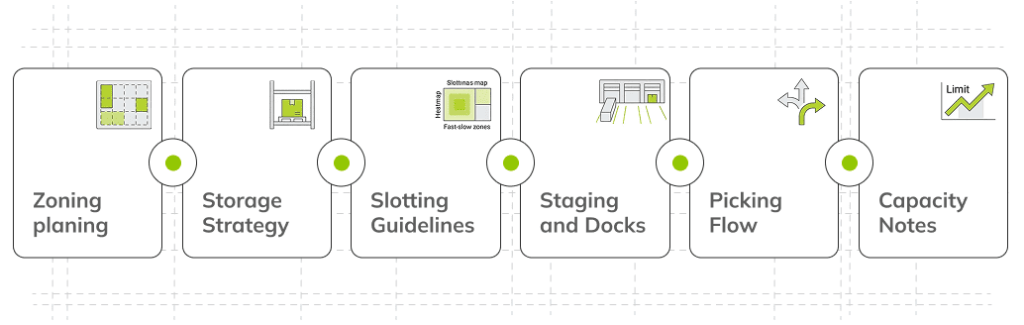
- Zoning plan: receiving, staging, storage, replenishment, picking, packing, returns, outbound
- Storage strategy: pallet, shelving, bins, bulk, forward pick, reserve placement
- Slotting guidelines: velocity zoning, item grouping, replenishment triggers
- Staging and dock plan: inbound/outbound capacity and door usage logic
- Picking flow: discrete, batch, wave, zone, or hybrid
- Capacity notes: constraints, growth space, peak-ready staging
Operational Flows
- Receiving -> putaway rules
- Replenishment timing and escalation
- Pick paths and packing station logic
- Returns and exception handling
Optional
Warehouse Layout Software Development
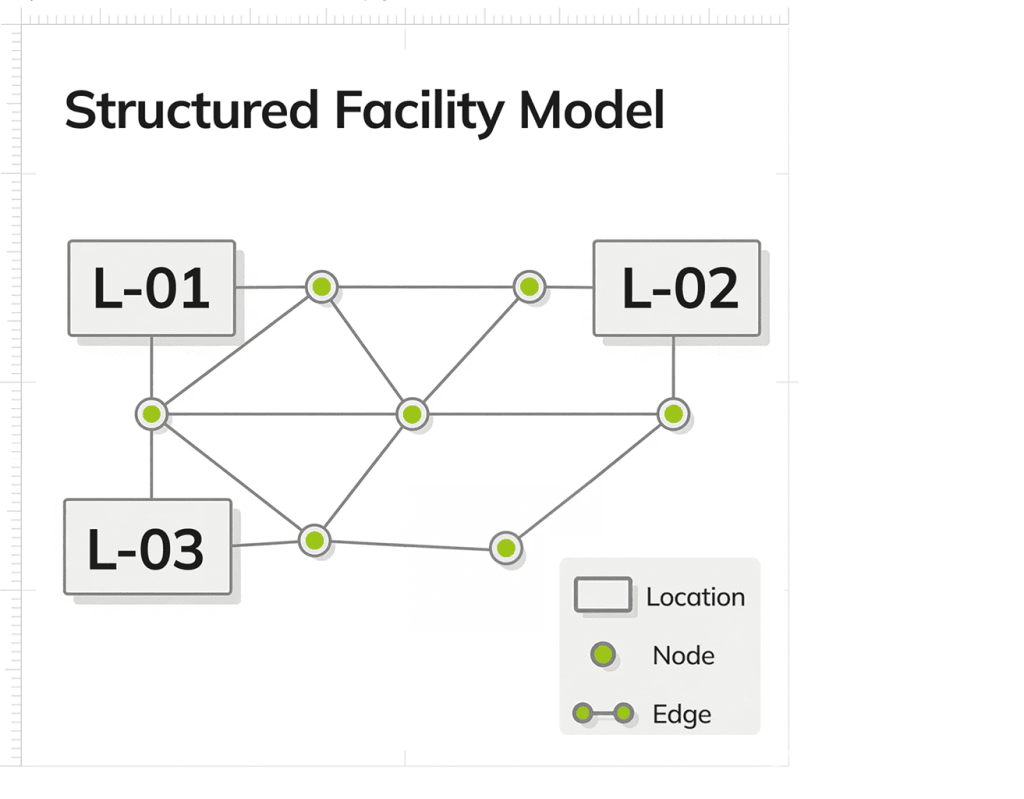
If you already manage layouts in an internal tool, or you need a system that keeps layout data consistent during frequent changes, we can develop or improve software that turns a “map” into a structured facility model.
Structured Facility Model
We represent the facility through core objects that make validation and route logic possible:
- Location: a physical place in the facility with parameters and a unique identifier
- Node: a routing point used to build paths (for example, turning points)
- Edge: a route segment between nodes
Data Quality Control and Reporting
We can add automated validation checks that catch layout data issues early and generate a PDF report. In one implementation, the module validated 19 quality parameters and produced a report for each run.
Flexible Geometry
Warehouse blocks can be configured with custom geometric dimensions, so the system fits real facilities instead of forcing template-only shapes.
Example Outcomes From a Layout-Software Project
In one implementation, this approach delivered measurable gains:
- Key map or layout construction time reduced from 2 months to 2 weeks
- Manual formatting issues removed, reducing duplication and coordinate errors
- Custom geometry supported for warehouse modeling
- Unique parameters supported for each Location in the facility model
Process
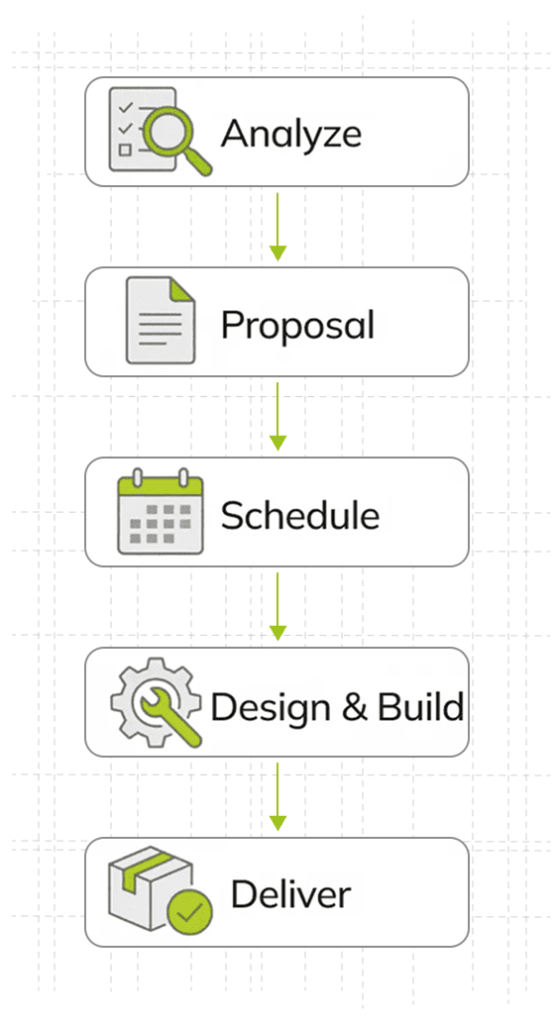
Analyze
We review your facility constraints, SKU profile, equipment, and workflows. We define what must be validated: routes, zones, capacities, staging rules, or data quality checks.
Proposal
We define scope and outputs: layout package only, software improvement only, or a combined approach.
Schedule
We align on milestones and the validation method (peak scenarios, throughput targets, physical constraints).
Design and Build
Layout design, facility modeling, validation rules, and optional reporting automation.
Deliver
Final layout package, software deployment (if included), and handover notes for implementation.
Portfolio
Examples of our work
View all cases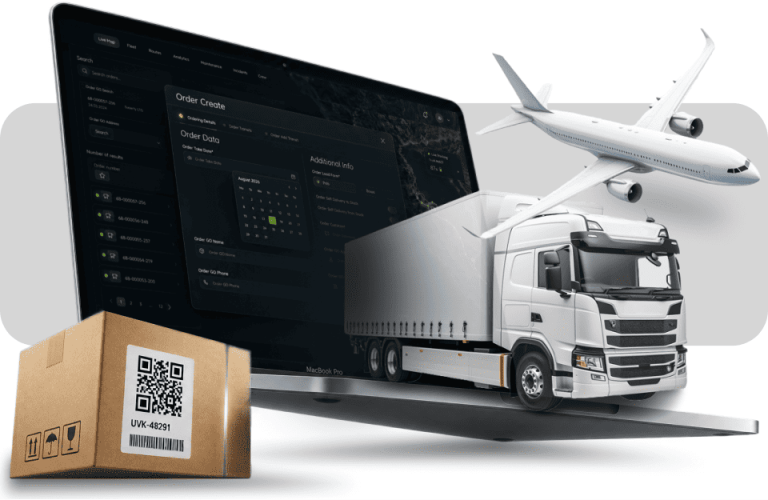
Unified Logistics Platform for a National 3PL Operator
We built an Order Management System for UVK, a leading 3PL operator in Ukraine. We cut delivery planning time to 40 minutes, with 98% of deliveries arriving on time
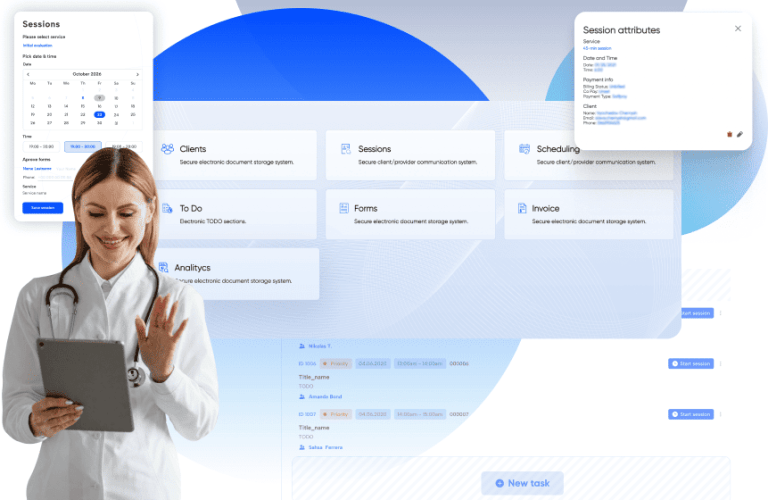
I-Practice Online Booking Web Platform
Healthcare booking platform that lets patients choose a doctor, pick a time slot, and confirm appointments with reviews, PDFs, and email notifications, while clinics manage schedules with less manual coordination.
FAQ
Do you design layouts for new warehouses and existing ones?
Both. For new sites, we design from a clean slate. For operating warehouses, we plan a staged changeover to avoid downtime.
Can you design around our current racking and equipment?
Yes. We can design using what you already own, then show optional upgrades as separate steps.
Do you include slotting rules?
Yes. Slotting and replenishment rules are part of the layout package because they determine real performance.
Can you plan for future automation?
Yes. We can reserve space and define flows that stay compatible with conveyors, sortation, or pick-to-light later.
Do you work with WMS constraints?
Yes. We align location structure, zones, and replenishment logic with your WMS capabilities.
How long does a layout project take?
It depends on data readiness, warehouse size, and whether operations must stay live during redesign. We plan scope and milestones during discovery.


Have a project in mind?
Let's chat
Your request has been accepted!
In the near future, our manager will contact you.
Have a project to discuss?

Have a partnership in mind?