QA in Product Development
Proactive QA across the full product lifecycle, with clear quality gates and automation that fits your release cadence.
Discuss Your Project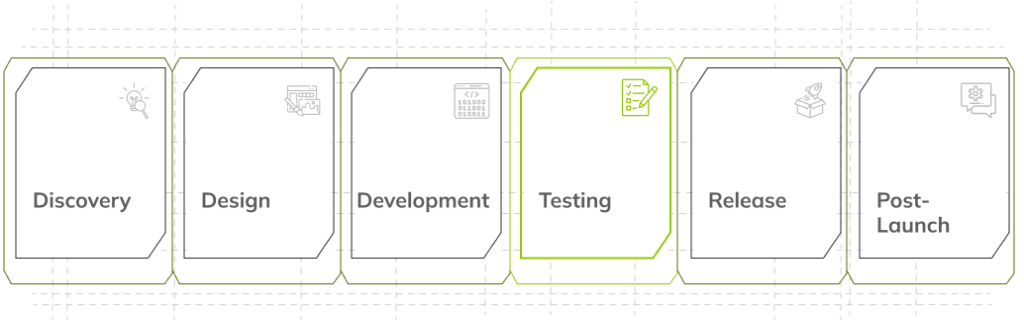
We embed QA into product development from discovery to post-launch. The focus is defect prevention, risk-based coverage, and release confidence.
Outcome: fewer production issues, faster feedback during delivery, and quality that stays stable as features, integrations, and traffic grow.
Why QA matters in product development
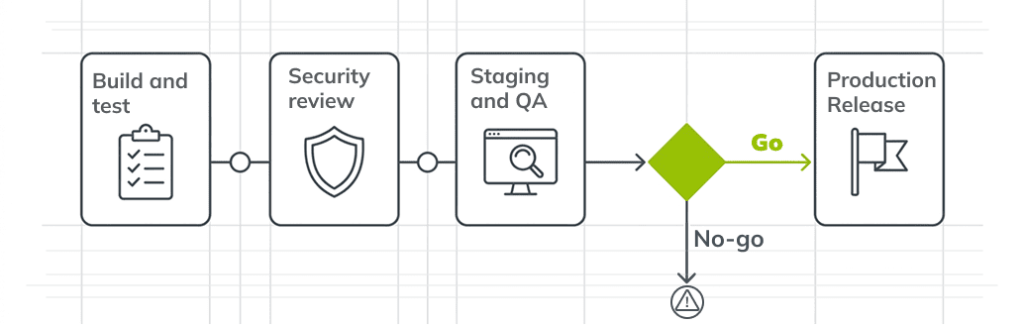
QA is not a “testing phase” at the end. It is a planned approach that reduces risk, keeps releases predictable, and protects product quality as the system grows.
When QA is done right, you get:
- fewer surprise regressions late in the sprint
- clearer delivery decisions (go vs no-go)
- faster iteration without quality drift
- lower cost of fixes, due to earlier detection
What QA covers
Quality strategy and standards
- Quality goals by release type (MVP, growth, mature product)
- Definition of Done and acceptance criteria that prevent ambiguity
- Quality gates that fit your real cadence (weekly, biweekly, monthly)
Risk-based scope and coverage
- risk ranking for features, integrations, and user flows
- coverage priorities based on impact and probability
- a clear map of what is in scope for each release
QA vs QC in practice
- QA is prevention: process, standards, early validation, and guardrails.
- QC is detection: verifying outputs, catching defects, and confirming readiness.
Strong teams use both, with QA starting earlier and QC supporting the finish.
Testing across product layers
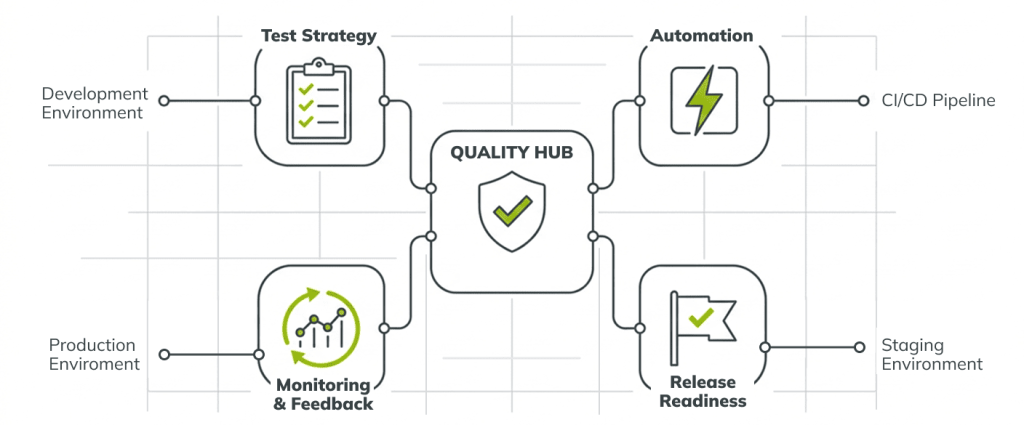
Core product confidence
- Functional testing for critical user flows and regression
- API testing for contracts, edge cases, and error handling
- UI testing for key paths and cross-device checks
Non-functional quality (when relevant)
- Performance testing for load, stress, and bottlenecks
- Security testing for common risks and secure defaults
- Accessibility checks when required by policy or market
QA integrated into the product lifecycle
| Stage | QA focus | Typical outputs |
|---|---|---|
| Discovery | risks, acceptance criteria, quality approach | quality plan, risk register, success metrics |
| Design | UX risks, edge cases, testability | scenario set, validation checklist, test data needs |
| Development | early checks, automation, CI visibility | automated suites, CI checks, test data setup |
| Pre-release | quality gates, regression, readiness | release readiness report, go/no-go checklist |
| Post-launch | monitoring signals, triage flow, learning loop | incident flow, root-cause notes, improvement backlog |
How we work
QA assessment
We review your delivery process, current coverage, tooling, environments, release cadence, and failure patterns.
You get: a short diagnostic summary, a risk map, and priority recommendations.
QA plan and setup
We define quality gates, align acceptance criteria, and choose the right mix of manual and automated checks based on how your team ships.
You get: a practical test strategy, a coverage plan, and a release-quality checklist.
Implementation
We add targeted automation where it saves time, improve test data practices, and make QA reporting visible and actionable for delivery teams.
You get: CI-ready checks, stable regression routines, and clear defect signals.
Release support and ongoing QA
We support releases, keep regression stable, and improve quality routines as the product grows.
You get: consistent readiness reporting and a repeatable flow for triage and fixes.
What you get
- QA strategy aligned with product goals and delivery speed
- Coverage map for critical workflows and integration points
- Acceptance criteria templates and a clear Definition of Done
- Automated checks integrated into CI where it makes sense
- Repeatable regression process with clear quality gates
- Reporting that helps decisions: what failed, impact, and the next action
- Release readiness artifacts: go/no-go checklist, release report, trend tracking
Portfolio
Examples of our work
View all cases
Unified Logistics Platform for a National 3PL Operator
We built an Order Management System for UVK, a leading 3PL operator in Ukraine. We cut delivery planning time to 40 minutes, with 98% of deliveries arriving on time
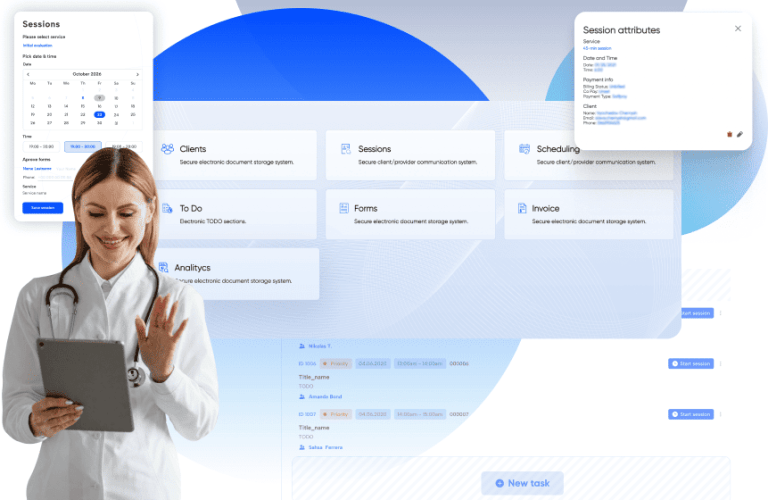
I-Practice Online Booking Web Platform
Healthcare booking platform that lets patients choose a doctor, pick a time slot, and confirm appointments with reviews, PDFs, and email notifications, while clinics manage schedules with less manual coordination.
FAQ
Is QA only manual testing?
No. A practical setup mixes manual exploratory testing with automation for repeatable regression and fast feedback.
When should QA start?
During discovery and planning. Early QA is mostly about clarity and prevention, not just finding bugs.
What is the difference between QA and QC?
QA is prevention through process and standards across the lifecycle. QC is validation and defect detection through checks and testing.
Can you join an existing project and improve quality fast?
Yes. We typically start with quality gates, focused scope, and automation around the highest-risk workflows.
Do you cover performance and security testing?
Yes. Scope depends on your product risks, traffic profile, and compliance requirements.


Have a project in mind?
Let's chat
Your request has been accepted!
In the near future, our manager will contact you.
Have a project to discuss?

Have a partnership in mind?