Your cameras already see everything, we make them report it
Make shelf gaps, safety incidents, and price boards detected and logged automatically after something's gone wrong.

Does this sound familiar?
-
Despite full coverage
A warehouse full of cameras, and still no idea what's actually on the shelf
-
Without real-time checks
Price boards checked by someone driving the route, once a week
-
Without instant alerts
An incident happens on camera, and you hear about it from a phone call, not an alert.
-
By the next report
Stock counts are already stale by the time anyone reads them.
-
Weeks behind operations
Manual counts and audits are always a few weeks behind the business.
-
Years later
Cameras installed years ago are still not doing anything but recording.
See what your cameras are already missing
Send us a camera feed, a warehouse area, or a retail use case. We’ll tell you directly what can be detected in real time, what accuracy is realistic, and whether the setup is worth piloting before you invest in a rollout.
Review my camera setup
When camera is in, the decision comes out
-

Capture
Any existing camera or feed -
Detect
Objects, people, text, conditions -
Act
Alert, log, or update your systems
Results in numbers
74%
fewer manual floor checks
5 sec
to detect and flag an issue
24/7
continuous monitoring, not periodic sampling
22%
fewer missed out-of-stock or compliance gaps

Your footage never leaves your infrastructure
-
No third-party video access
Your camera feeds are never sent to an external provider for analysis. Video stays inside your infrastructure while the system performs detection and monitoring locally.
-
Local and edge processing
Models run on your servers, private cloud, or edge devices near the cameras. Alerts and system updates are generated in real time without moving footage outside your environment.
-
GDPR by design
Local processing, restricted access, and data-minimization principles are built into the architecture from the beginning, not added later as a compliance workaround.
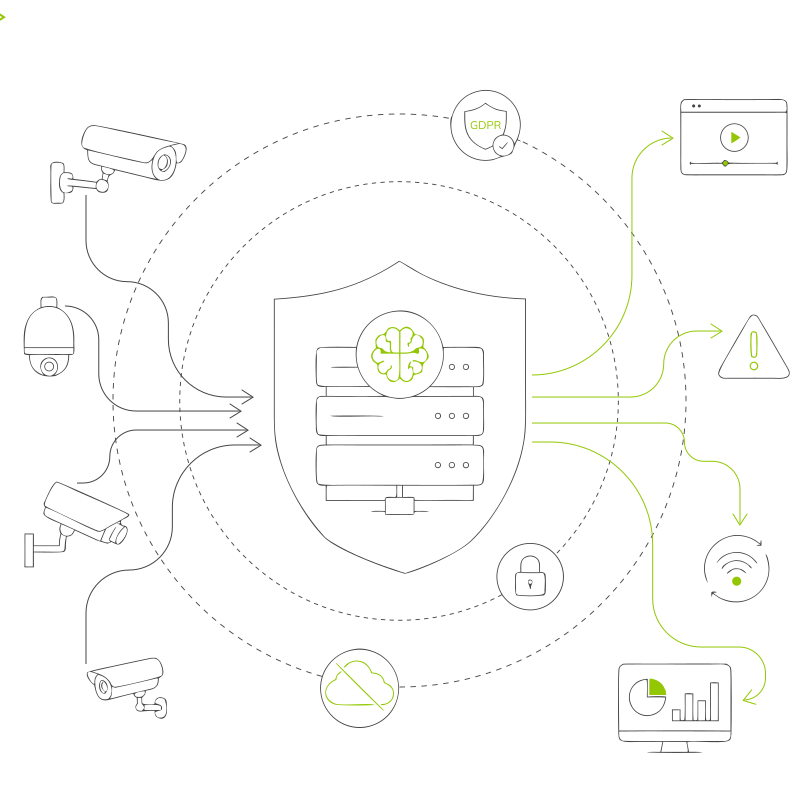
How it works
- From first call to your team getting the floor time back.
- 30-min call to map your cameras, feeds, and what needs detecting.
- Model trained on your own footage and your specific objects or conditions.
- Pilot run with accuracy checked against real feed, not a demo reel.
- Full rollout with live detection and alerts, your team gets the floor time back.

Client - regional grocery retail chain, 40+ stores
-
Challenge:
Store managers relied on manual planogram walks twice a week; out-of-stock issues on high-turnover SKUs were often caught only during the next scheduled audit
-
What we did:
Connected existing in-store cameras to our detection model, trained on the client's own shelf layouts and SKU set. Ran a 6-week pilot across 3 pilot stores before full rollout
-
Quote
"We stopped finding out about empty shelves from customer complaints." — Operations Manager of the Company

-
Same-shift alerts
shelf gaps flagged before the next scheduled walk, not after -
31% less
restock lag on top-selling SKUs during the pilot -
5 hrs/week back
per store manager, previously spent walking the floor -
3 months
from pilot sign-off to full rollout across 40 stores


Have a project in mind? Let's chat
Your request has been accepted!
In the near future, our manager will contact you.
Have a project to discuss?

Have a partnership in mind?