Mini-games for the Supermarket
A gamified loyalty layer built for real store conditions

Client Background
The client is a regional supermarket chain with a growing network of stores, plus a companion app and website used for loyalty points, store locators, and weekly promotions. Foot traffic was steady, but digital engagement was shallow. Customers opened the app to check a coupon, then left. Visits stayed transactional and infrequent, and nothing in the app made engaging with the brand feel rewarding in the moment or gave shoppers a reason to come back between trips.
Who was the client?
- A regional chain of thousands of small, convenience-format stores
- Customers already used their app daily, but only to grab a coupon and go
- Bigger competitors were raising the bar on digital experience, and they felt it
The Challenge
A utility, not a habit
The app was used as a utility - check a coupon, scan a receipt, close it with no reason for customers to open it outside an active shopping trip, let alone spend time inside it
Rewards that didn't feel like winning
The chain's loyalty program relied on static discounts and points, with nothing playful or interactive to make earning a reward feel like an achievement rather than a formality
Visits that never turned into a relationship
Purchases were one-off events disconnected from any ongoing relationship with the brand, giving customers little incentive to choose the same chain on their next trip
A reward is only real if it works at the till
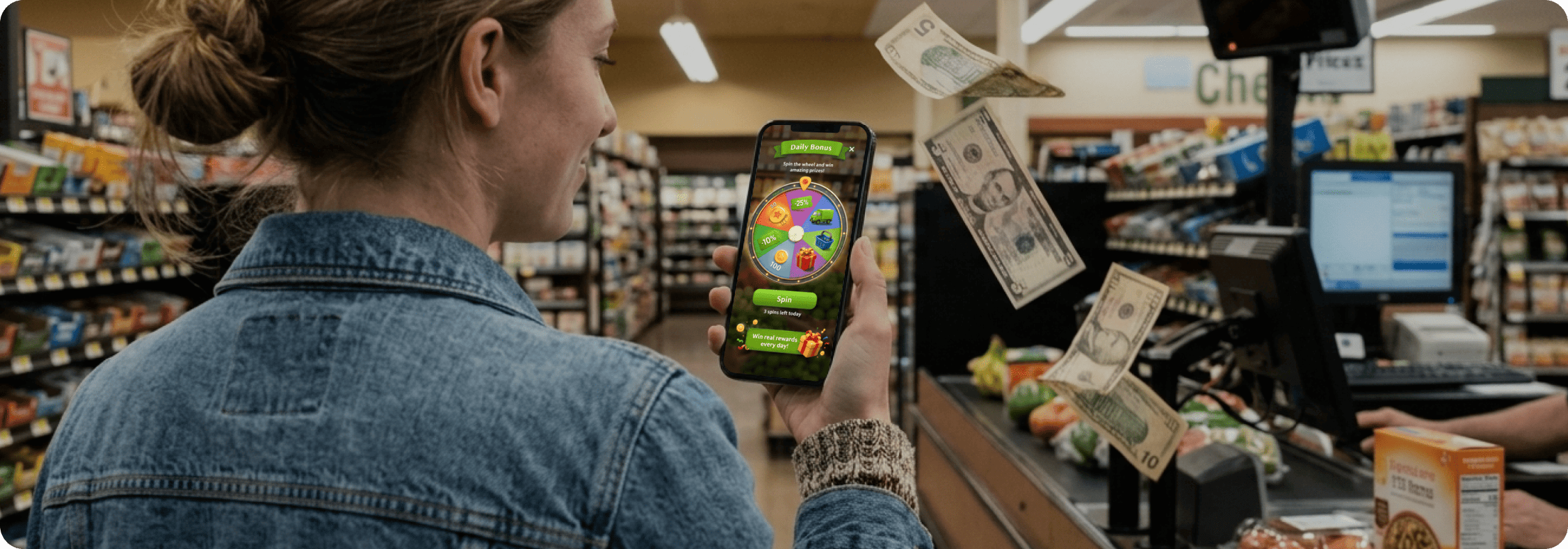
Any reward earned in-app needed to translate into something usable at checkout, which meant the games couldn't exist in isolation, they had to connect cleanly to POS and CRM systems, and run smoothly on the modest mobile devices most shoppers carried into the store
Sound like a gap you're dealing with too?
An app people open out of habit, not obligation. Rewards that feel earned, not just applied. Engagement that survives contact with a real checkout line. If any of that sounds like the gap you're staring at right now, it's worth a conversation before another quarter of "check the coupon and leave" passes by.
Close the gap
Solution & Approach
We built this as a lightweight gaming layer on top of the retailer's existing app and website - not a separate destination customers had to seek out. The goal was for play to feel native to the shopping trip: quick, rewarding at checkout, and light enough to run smoothly on everyday phones.
Platform:
Engagement Model:
Technologies:
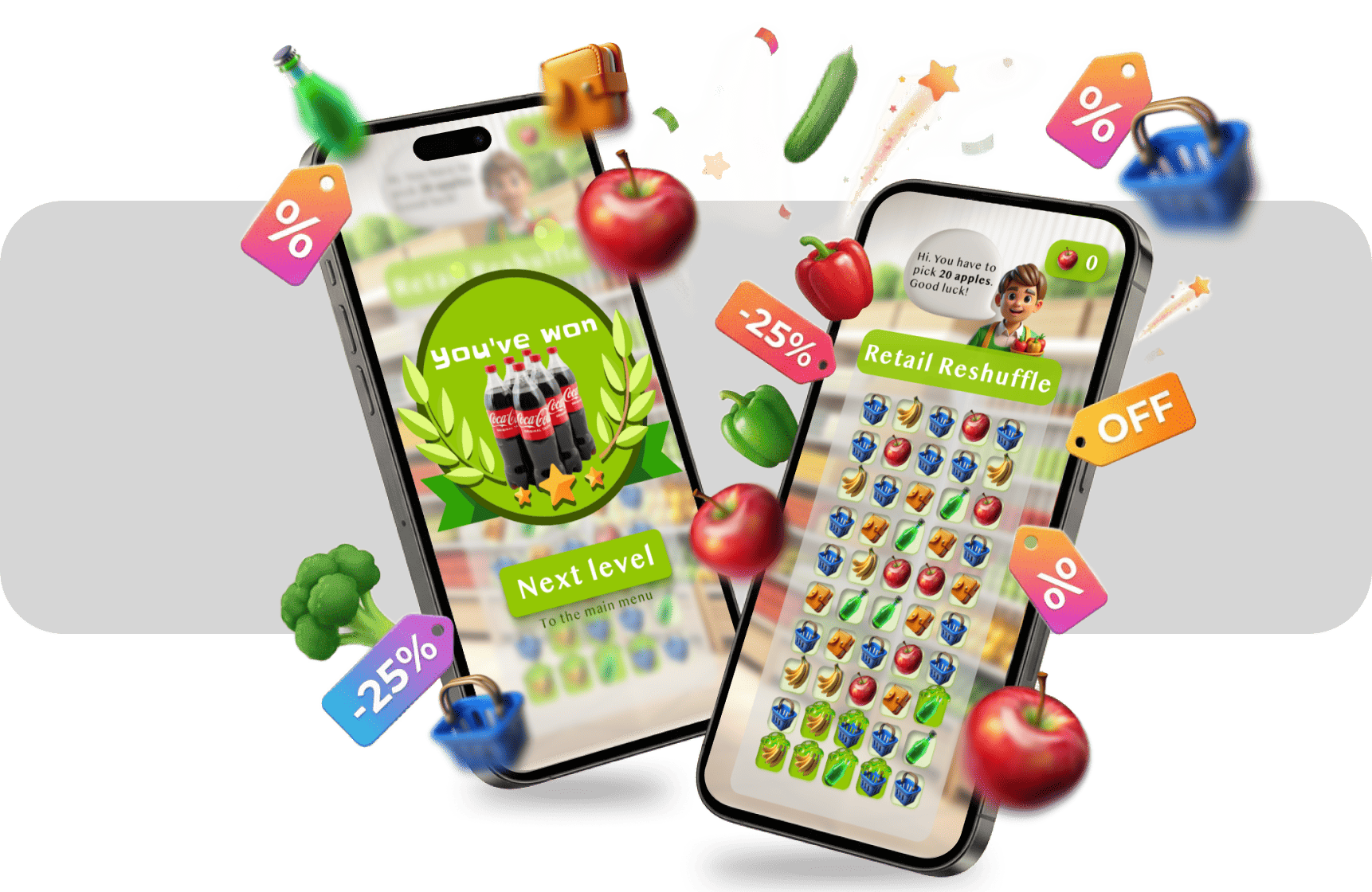
- Match-3 core mechanic ("Retail Reshuffle"). Customers match grocery-themed tiles — apples, vegetables, fruit - toward a goal like "collect 20 apples," tying the game directly to the shopping experience.
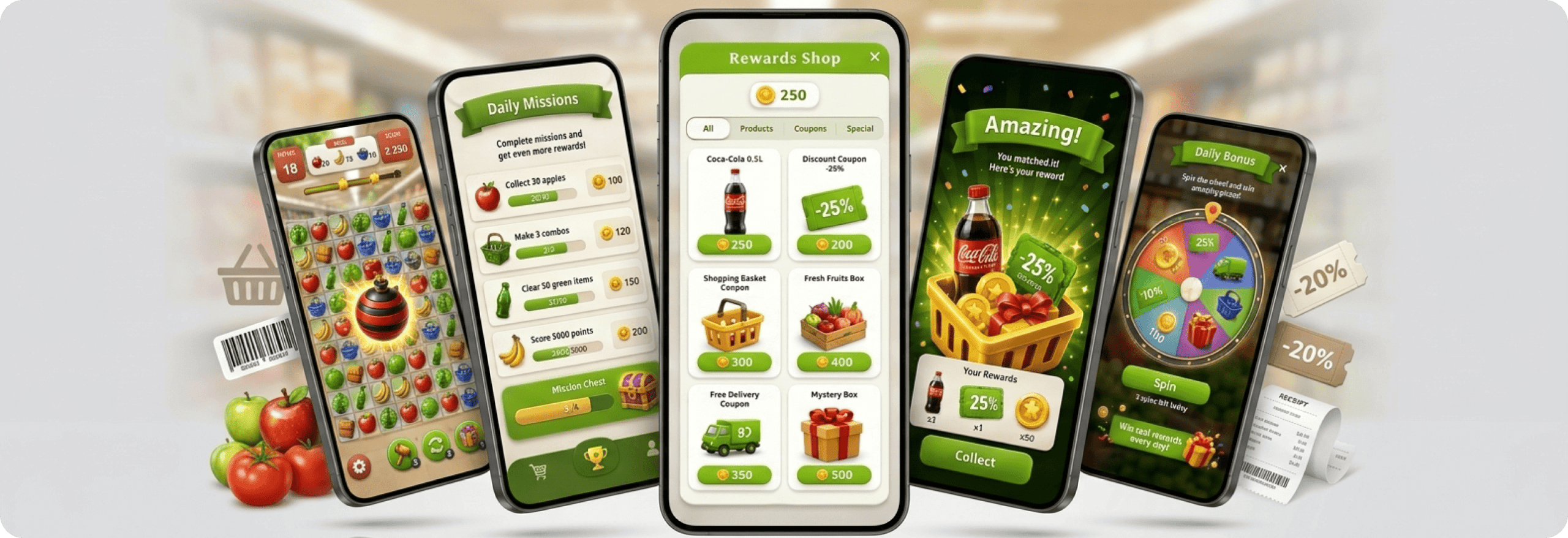
- Prize and coupon engine. Rules-based rewards, from percentage discounts to perks like a free bottle of water, each generated as a redeemable code.
- Progress and reward screens. "You've won" and "Next level" screens confirm the win instantly and pull customers into the next game.
- POS/CRM-connected redemption. Coupons issue through the retailer's existing systems, so a prize won on a phone applies at checkout with no manual reconciliation.
Execution
Development moved in short, iterative cycles rather than one long build phase. The team started with the core game mechanic and prize logic, validated it against real store conditions early, and layered in the reward system, admin controls, and POS/CRM integration as each piece proved stable.
Our approach in practice
- Design-first flows. Reward screens like "You've won" and "Next level" were prototyped before any game code, so the payoff felt right from the first build.
- Deliberate tech selection. Phaser and Vue.js were chosen for performance on low-end phones.
- Parallel dev & design. Game logic, prize rules, and POS/CRM integration were built alongside the visuals, not after.
- Live feedback loops. Every build was stress-tested under real store conditions - weak signal, older phones, live checkout - with fixes rolled into the next round.
Results & Business Impact
Operational Impact
- 65% of all in-game coupons were redeemed at checkout, with single-use, POS-verified codes ruling out duplicate or fraudulent redemptions.
- Manual discount checks at the till became the exception, not the rule.
Experience Impact
- 2x more weekly app returns among players versus non-players.
- Everyday rewards, like free water or a drinks discount, made loyalty feel personal.
- Engaged players were more likely to stick with the brand, in line with broader loyalty research.
Technical Impact
- Smooth frame rates held even on older, entry-level Android phones.
- POS integration ran without disrupting checkout operations, even during peak store hours.
- Store teams adjusted prizes and campaigns directly, without needing new development cycles.
- New mini-games shipped independently of app-store review, cutting release turnaround from weeks to days.
Have a project in mind? Let's chat
Your request has been accepted!
In the near future, our manager will contact you.
Have a project to discuss?

Have a partnership in mind?