Dedicated Team vs In-House: Which Model Fits Your Growth Plan
Scaling a product team is rarely “just hiring.” It is a structural decision that shapes delivery speed, cost behavior, knowledge retention, and how much leadership attention gets pulled into people operations. Most companies eventually hit the same tension: an all in-house model can become slow and expensive to scale, while classic outsourcing can feel like a black box.
Between those poles sits the dedicated team model. Done well, it combines ownership on your side with operational stability on the partner side. Done poorly, it turns into a glorified task queue with unclear accountability.
This guide breaks down both models in practical terms, then gives you a decision framework you can use without guesswork.
What “In-House” Really Means\
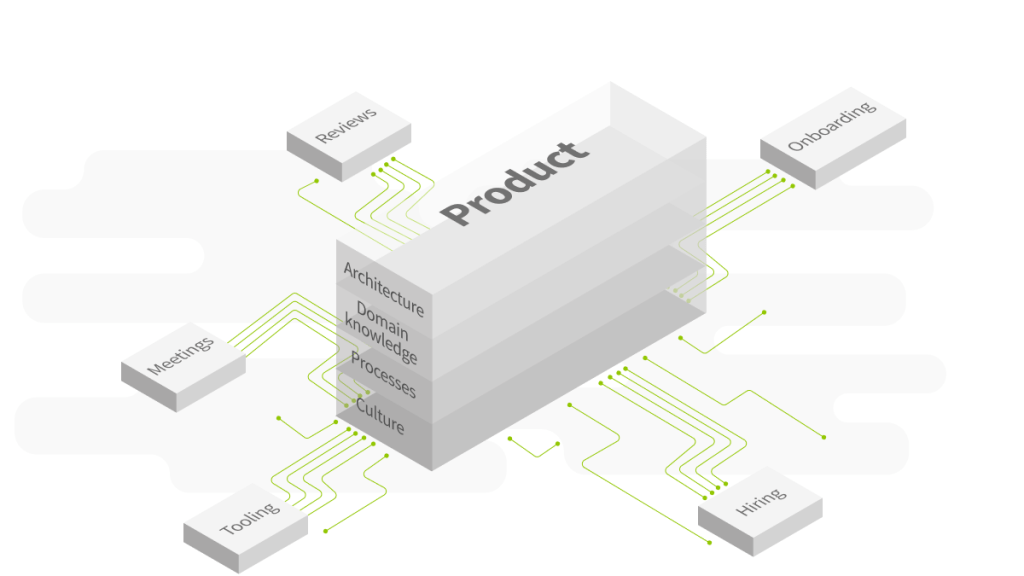
An in-house team is fully embedded in your organization. Engineering, product, design, QA, DevOps, and delivery management are employees, operating inside your processes, culture, and incentive structure.
When it works best:
- Product development is central to your business identity
- You already have strong technical leadership (CTO, EMs, architects)
- You want deep domain knowledge to accumulate inside the company for years
- You need strict control for IP, security, regulatory, or data residency reasons
Where in-house teams are strong
Deep alignment and shared context
People absorb domain knowledge naturally through proximity, repeated decisions, and informal collaboration.
High leverage from culture
If your culture is a real advantage (quality bar, ownership mindset, internal mentorship), in-house teams can compound it.
Tighter long-term control
Architecture, hiring standards, and knowledge systems are yours to shape end to end.
Hidden friction points companies underestimate
Time to hire is not the only delay
Even after hiring, onboarding and ramp-up can easily consume a quarter. For complex products, “fully productive” may take longer.
Fixed cost is rarely fixed
Payroll is only one layer. Add recruiting spend, tooling, management overhead, retention actions, and inevitable market-driven comp inflation.
Leadership time shifts away from product
As the team grows, exec focus often drifts from roadmap outcomes to staffing issues, performance reviews, and internal coordination.
Scaling down is painful
When priorities change, reducing capacity is slow, disruptive, and emotionally costly.
In-house teams reward long planning horizons. They can feel heavy when your priorities change every few months.
What a Dedicated Team Actually Is
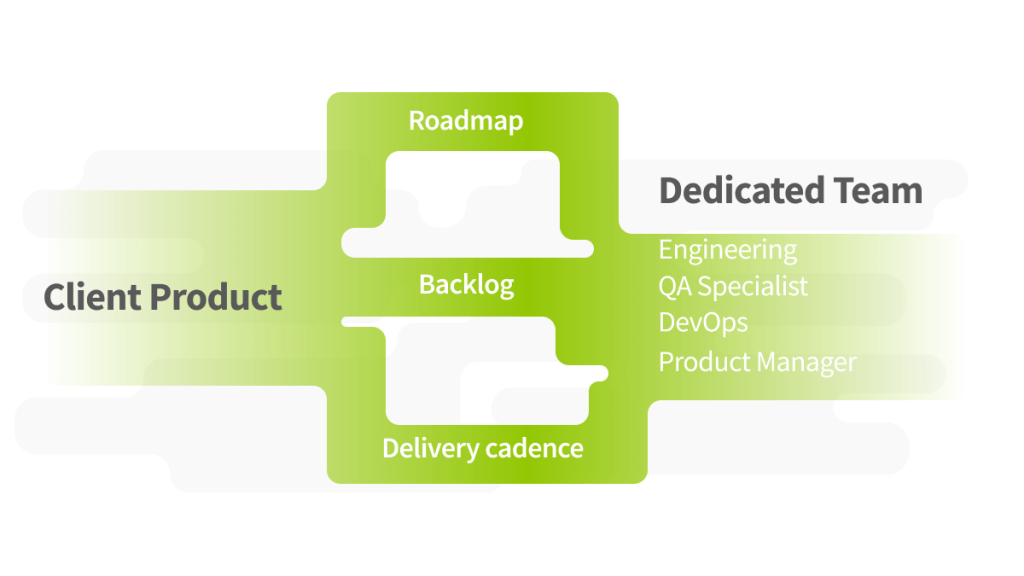
A dedicated team is a stable, long-term product delivery unit provided by a technology partner. The team works exclusively on your product, follows your delivery rhythm, and is measured on outcomes, not just throughput.
The key distinction is operational ownership:
- You own product direction, priorities, and acceptance.
- The partner owns hiring pipelines, HR, retention, payroll administration, and team stability.
A dedicated team is not “staff augmentation without responsibility,” and it is not a rotating pool of contractors. It is a product team you can scale without building the full employment machine around it.
Where dedicated teams tend to win
Fast time-to-start
A partner can assemble a team in weeks, not months, especially when they can reuse proven hiring channels and pre-vetted talent.
Lower management drag
You still need product leadership, but you remove a large slice of HR and retention work.
Predictable cost behavior
Instead of expanding fixed payroll, you typically get a stable monthly run rate that is easier to plan across quarters.
Controlled scaling
You can add or reduce roles with less internal disruption, while keeping the core unit intact.
Common misconceptions
“We lose control.”
You lose control only if you outsource product ownership or lack a real product owner on your side. With clear roles, control stays with you.
“Quality will be lower.”
Quality is governed. It depends on engineering standards, code review discipline, testing strategy, release gates, and observability, not geography.
“They won’t care about the product.”
Teams care when incentives, stability, and context are real. If the engagement is long-term, the team is included in planning, and success metrics are shared, commitment becomes practical, not emotional.
The Comparison That Matters
Most debates get stuck on ideology. The right comparison is operational.
Speed to start
- In-house: Recruiting, interviewing, negotiations, onboarding, and ramp-up. Realistically months.
- Dedicated: Team can be staffed and producing in weeks if scope and roles are clear.
Management and coordination load
- In-house: HR, retention, performance cycles, leveling frameworks, career paths, and internal staffing conflicts.
- Dedicated: Partner handles employment operations. You focus on roadmap, product decisions, and delivery management.
Cost behavior over time
- In-house: Rising salary pressure, expanding benefits, recruiting costs, management layers.
- Dedicated: More stable run rate, easier to forecast. You still pay for seniority, but the curve is usually smoother.
Flexibility under changing priorities
- In-house: Contraction is difficult. Reassigning people can damage morale and create internal competition for headcount.
- Dedicated: You can scale capacity more deliberately while keeping delivery continuity.
Knowledge retention
- In-house: Knowledge stays inside the company if turnover is low and documentation is mature.
- Dedicated: Knowledge stays inside the delivery unit. The risk is churn if the partner runs the team like a staffing pool. The mitigation is contract structure, onboarding discipline, and keeping the core team stable.
Comparison Table
| Dimension | In-House Team | Dedicated Team |
| Time to ramp | Slower (hire + onboard) | Faster (team assembled sooner) |
| Fixed overhead | Higher (HR, recruiting, retention, management) | Lower (partner absorbs employment ops) |
| Control over roadmap | Full, if leadership is strong | Full, if product ownership is kept client-side |
| Quality consistency | Strong if standards are mature | Strong if governance is explicit |
| Scaling up | Slower, expensive, process-heavy | Faster, more elastic |
| Scaling down | Painful, disruptive | Easier, more controlled |
| Domain knowledge | Deep internal accumulation | Deep within team unit when stable |
| Best for | Stable roadmap, long horizon, internal tech identity | Growth phases, parallel streams, speed without HR scaling |
Which Model Fits Your Growth Stage
Early-stage or post-MVP
A dedicated team is often the practical default when:
- speed matters more than org structure
- you need senior execution before you can justify senior internal hiring
- leadership bandwidth is limited
The critical condition: you must have a real product owner and a clear backlog discipline. Without that, any model fails.
Growth-stage scaling
Dedicated teams work well when you need:
- parallel feature streams (web, mobile, platform, integrations)
- expansion into new markets or regions
- faster iteration without turning hiring into a full-time internal project
A common setup is hybrid:
- In-house: product leadership, architecture, security, core platform decisions
- Dedicated: feature squads, integrations, QA automation, DevOps support, mobile delivery
Mature product with stable roadmap
In-house becomes attractive when:
- long-term optimization and reliability dominate
- the domain is highly specialized
- compliance and internal governance are central
- you want deep internal ownership for years and can tolerate slower scaling
The Real Risk: Not the Model, the Setup
Dedicated team “failures” are usually setup failures. The same issues can break in-house teams, but they show up faster in partner engagements.
Typical causes:
- No empowered product owner on the client side
- Vague outcomes and success metrics
- Weak onboarding, unclear architecture decisions, missing documentation
- Treating the team as a ticket queue rather than a product unit
- No clear release process, no definition of done, no quality gates
If you want a dedicated team to feel like an internal team, you need internal-grade governance.
A Practical Decision Framework
Use these questions to pick the model that matches reality, not preference.
1) How urgent is delivery?
- If you need meaningful output this quarter, dedicated is usually safer.
- If you can invest 2-3 quarters into hiring and ramp-up, in-house may pay off.
2) Do you have strong product and technical leadership?
- If yes, either model can work.
- If no, in-house hiring will not fix it. You will only hire confusion faster.
3) How volatile is your roadmap?
- High volatility favors dedicated (elastic capacity, faster restructuring).
- Low volatility favors in-house (long-term compounding of context).
4) What is your tolerance for HR overhead?
- If you want leadership focused on product and customers, dedicated reduces HR load.
- If you want full internal ownership of talent systems, in-house fits.
5) What happens if priorities change in 90 days?
If the honest answer is “we will need to re-scope,” dedicated usually wins.
How One Logic Soft Builds Dedicated Teams
At One Logic Soft, a dedicated team is built as a long-term delivery unit, not temporary staffing. Team composition follows product goals and delivery constraints, not generic role shopping.
How the model is run in practice:
- Stable core team to protect product context and velocity
- Clear roles: your side owns product decisions, acceptance, and priorities
- Engineering governance: code review rules, testing strategy, release gates, observability expectations
- Delivery cadence aligned to your process (Scrum, Kanban, or hybrid)
- Operational continuity handled by us: recruiting, HR processes, retention, and backfill planning
If you want to discuss which setup fits your stage, you can start here: https://onelogicsoft.com/
For a direct contact form: https://onelogicsoft.com/custom-software-development


Have a project in mind?
Let's chat
Your request has been accepted!
In the near future, our manager will contact you.
Have a project to discuss?

Have a partnership in mind?